Beyond Al-Andalus: What Are We Building?

Reflections from Ustadh Hisham Abu Yusuf’s lecture at Makki Masjid on 22/8/26
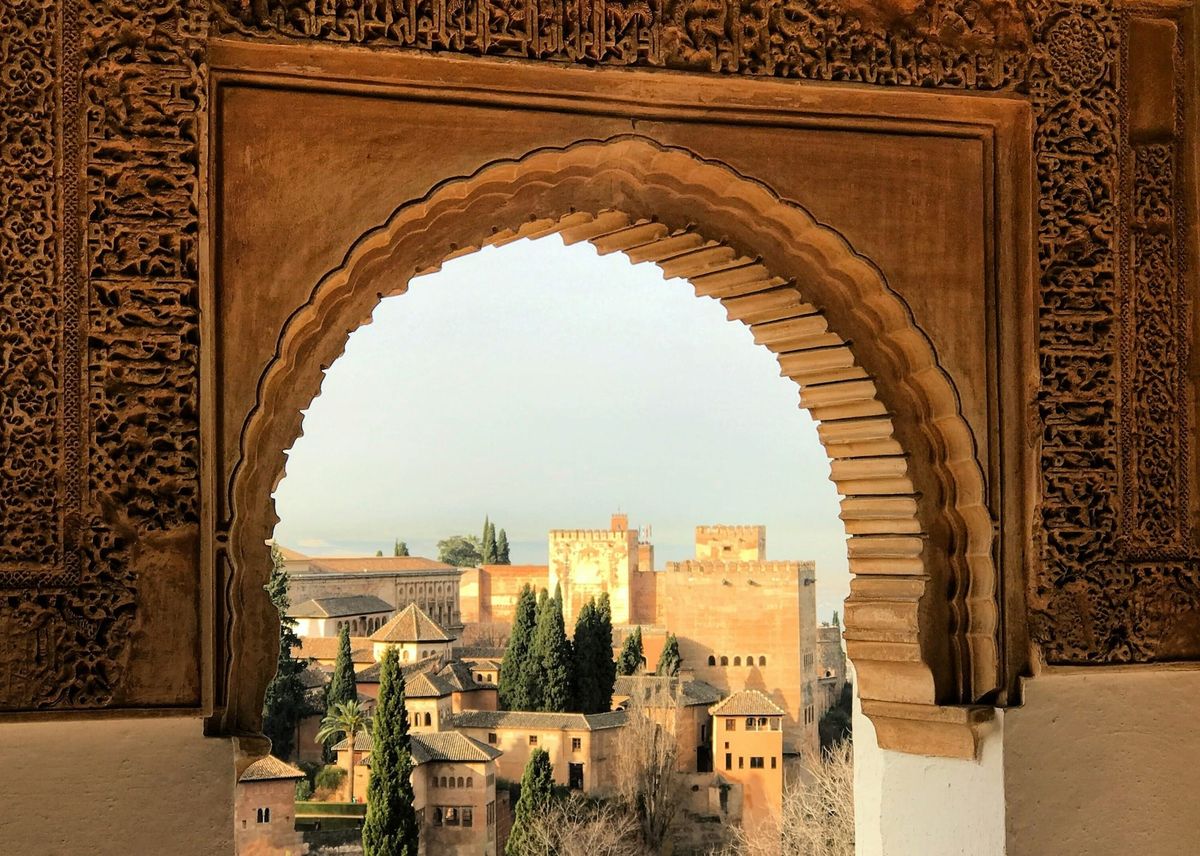
There are some parts of history which seem to belong entirely to other worlds. Their cities ruins, their rulers mispronounced names in classrooms and their contributions to the world forgotten. Yet, there are other places in history, despite the centuries between us, that remain strangely intimate. And Al-Andalus is one of them.
Perhaps because its story represents so much of what we know to be Islamic civilisation at its peak. From Córdoba to Granada; libraries and hospitals, scholars and poets, mathematics and medicine, architecture and philosophy on a scale unprecedented. Al-Andalus is a story of extraordinary achievement, but also of fragmentation, decline and disaster. Like many of us, I am naturally drawn to the first half, but after we finish admiring what was built we find ourselves mourning what is lost. However, past this admiration and grief, there is a more pertinent question to be asked. What made the success of Al-Andalus possible?
I recently attended a lecture by Ustadh Hisham Abu Yusuf about Al-Andalus. I went expecting dates and facts, but I left with an understanding that Al-Andalus has much to say to us Muslims living in Britain in 2026.
When we are born into a functioning society, it is difficult to imagine the absence of the systems that keep the balance. We assume the permanence of its institutions and traditions (although I think history itself exists to expose this illusion). Abu al-Baqa al-Rundi's elegy for Al-Andalus laments the fall of Muslim civilisation in Andalusia and the sadness of watching what was thought indelible become another nation in a long list of nations expunged from the face of the earth.
Allah SWT tells us in Surah Ali Imran 3:140 "We alternate these days of victory and defeat amongst people". Power and weakness, victory and defeat are necessary to the human condition, no person nor society can enjoy the permanent possession of the world's joys. Al-Andalus is more than just an episode in history, it's an illustration of the nature of this dunya itself.
We tend to think of history as something that happened to other people in other places at some other time. But the people of Al-Andalus experienced their own present as we experience ours today, they lived their lives just like we do, with rigid assumptions about the coming of tomorrow. They didn't know then, that they were living a life which we centuries later would call a short time in history.
And, we too, have not come to this realisation.
Tariq ibn Ziyad crossed into the Iberian peninsula in 711 AD, burning his ships behind him, commanding 7,000 men against an army of 100,000. These men who sailed far away from their homes, facing an army ten times their size, could not have imagined they were establishing an 800 year era of Muslim history.
Yet, any flourishing civilisation begins with people doing things with unknown consequences but an unwavering conviction in Allah's plan. It's easy to simplify Al-Andalus to its mathematics, medicine, astronomy, philosophy, literature and architecture. But what made it a truly golden age?
Muslims in Al-Andalus encountered Western philosophy and science closeup for the first time. They educated and immersed themselves, filtered what was not compatible with Islam and accelerated what was beneficial. An important lesson can be taken here by us Muslims in Britain. There is an impetus for us to engage with the Western culture without assuming that said engagement requires assimilation, just as faithfulness does not require intellectual stagnation.
One of the most important things about Al-Andalus is that its achievements were not produced by just brilliant individuals. Behind scholars were institutions, behind institutions were resources, behind resources were systems of waqf. Waqf is a charitable endowment that regenerates money to fund projects, often for the community. The waqf tradition is particularly revealing because it represents a very different conception of wealth from the one we know today.
Only look at our own communities and you will see that Muslims are incredibly generous (2 billion pounds a year generous) but maybe charity for foreign emergencies shouldn't be our primary focus, as shocking as it sounds. Muslims in the UK are emotional givers and not strategic investors. Muslims who think in decades rather than reactive fundraising campaigns, who understand that an institution, a school, a research centre, a business or a waqf is the real future for Muslims in the West is what we need. And this long term mindset is exactly what allowed Al-Andalus to become what it was. With this mindset could Britain not become a new Al-Andalus?
...And could we be part of building it?
This is the point where Al-Andalus stops being a story about Spain.
It becomes a question about us.
Muslims in Britain are educated, talented, wealthy and blessed with a myriad of opportunities. But the achievements of some individuals does not equal collective upliftment. If Allah has placed us here, then we have to ask what can I contribute, establish and leave behind? Am I just a nameless and impactless passerby who exploited the resources of this nation without giving anything back? We excel individually with our careers, cars, homes and holidays but what do we do for the rest of British society, Muslim or not? Ask yourself, what can I build at my university, in my masjid or within my community that will benefit others for generations to come? This line of questioning is the difference between just residing somewhere and belonging somewhere.
We are here to build with what resources Allah has given us. Al-Andalus teaches that civilisational success requires faith and knowledge and confidence and institutions and leadership and sacrifice and vision.
Those who began the story of Al-Andalus did not see its conclusion. Al-Andalus left us ruins and poems but also lessons, a mission and a blueprint to build the next flourishing era of Islam in the West.
And it all comes back to that one question,
What are we building?
Issa.
Follow Ustadh Abu Hisham Abu Yusuf @hishamabuyusuf
@theissaishaq